Hemp Gummies Ingredients: How to Read the Label
Explore hemp gummy ingredients, pectin, gelatine, sweeteners, milligram labels and nutrition information in this practical Australian guide.
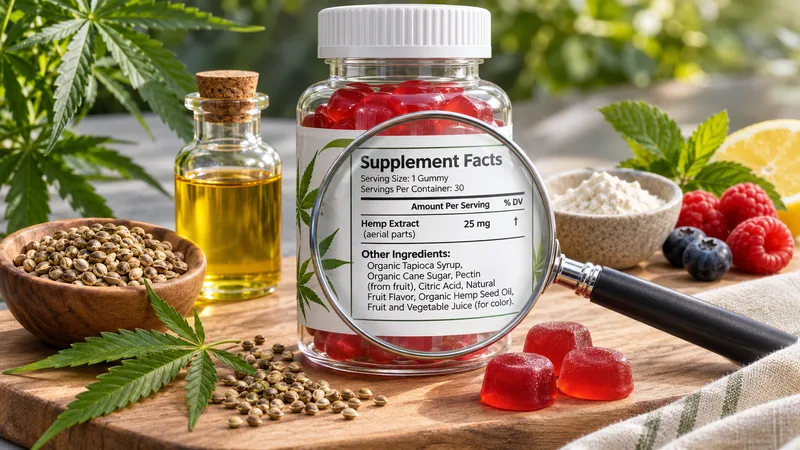
A thoughtfully formulated hemp gummy brings together several different ingredients, each with a particular role. The hemp component gives the product its identity; the gelling system gives it shape; and the remaining ingredients influence taste, appearance, stability and texture. Reading the ingredient declaration is one of the most rewarding ways to understand how a finished gummy is put together.
This Australian guide takes a practical look at the details on a label. It is intended for readers who want to distinguish meaningful composition information from general front-of-pack descriptions. It does not assume that every brand uses the same formula, and it does not treat an ingredient quantity as a recommended amount to consume.
The anatomy of a gummy ingredient list
The list of ingredients on a packaged food is a description of what goes into that food. For most foods sold under Australian labelling rules, ingredients are listed in descending order by ingoing weight, subject to the applicable provisions and exceptions, as explained in the FSANZ ingredient labelling guide. This means the order can provide an impression of how a recipe is composed, but it does not provide the exact percentage of every ingredient.
A gummy may contain a carbohydrate base, water, a gelling ingredient, an acidity regulator, flavouring components and a hemp-derived ingredient. Some formulations have a surface coating, while others have a smooth uncoated finish. A description such as mixed berry may identify a flavour profile without specifying whether real berry ingredients, natural flavourings or other flavourings are present. The ingredients list is the place to resolve the distinction.
It is worth reading the declaration all the way through. A component near the end may still matter if you have a dietary preference or allergy. Conversely, a prominently advertised botanical on the front of a jar might account for a relatively small proportion of the finished food. The position of a marketing claim is not the same as the position of an ingredient in a recipe.
Understanding the hemp component
The most important word in a hemp ingredient declaration is often the word that follows hemp. Seed oil, seed protein and extract are not identical descriptions. Hemp seed oil is obtained from seeds and contains naturally occurring fatty acids. Seed protein ingredients have a different composition, while an extract can describe a range of preparations with different properties.
A useful declaration identifies the source material and, when relevant, the quantity of that material. An unexplained phrase such as premium hemp blend may leave questions about what the blend contains. A clearly named ingredient provides a better starting point because it can be considered in the context of the actual formulation.
There is also a distinction between the total mass of a preparation and the amount of an individual constituent within it. For instance, a stated mass of oil does not establish the mass of any particular fatty acid. Likewise, a declared mass of an unspecified extract does not establish the amount of a particular cannabinoid. These measurements concern different substances. Our introduction to hemp gummies explains how these ingredients relate to the broader hemp category.
Pectin, gelatine and the texture of a gummy
Pectin and gelatine are two established ways to create a gel in food formulations. Pectin is derived from plant material and is familiar in fruit preserves. Gelatine is produced from animal collagen and is widely used to create soft, elastic textures. Depending on the recipe and processing conditions, they can give a gummy quite different characteristics.
Pectin formulations can be designed to have a soft or relatively firm bite. Their behaviour depends on factors such as the type of pectin, acidity and the balance of other recipe components. Gelatine formulations can have a characteristic elastic texture. Neither gelling ingredient establishes the amount of hemp in the final product, and it would be inaccurate to interpret texture as an indication of botanical concentration.
For readers who prefer plant-based products, pectin can be an interesting feature of a formulation. However, a pectin base is not sufficient to determine whether every ingredient is suitable for a vegan diet. Colours, coatings and flavouring ingredients may also need to be considered. A clearly documented dietary statement or appropriate certification can help resolve questions the ingredient names alone do not answer.
Sweetness, acidity and flavour
Sweetness and acidity work together in many fruit-flavoured gummy recipes. Sugar and glucose syrup are familiar ingredients in conventional confectionery. Some recipes use alternative sweeteners or bulking ingredients to achieve a different nutritional or sensory profile. The exact choice influences the finished product rather than the identity of hemp as a botanical ingredient.
A label that uses the term sugar-free should be understood in the context of the relevant food rules and its nutrition information. A sweet-tasting product need not contain the same type or quantity of sugar as another sweet-tasting product. Looking only at the front-of-pack phrase can obscure useful information about the recipe. Comparing the nutrition panels on a consistent basis gives a clearer picture.
Acidity regulators such as citric acid may contribute to the tart character of a fruit flavour and can also affect how a gelling system performs. Flavourings, colours and other minor ingredients can contribute to the sensory identity of the product. These components have ordinary formulation roles. Their presence is not evidence of the strength or effectiveness of the hemp ingredient.
Milligrams, grams and the number of gummies
Three different kinds of numbers frequently appear on packaging: the weight of the whole container's contents, the number of pieces and the quantity of a named ingredient. They should not be confused. A label can legitimately use grams for the net weight and milligrams for a smaller component of the recipe.
Consider the following fictional examples. They illustrate how a label can be interpreted and are not descriptions of actual products or instructions for taking gummies.
| Declaration | What the number describes |
|---|---|
| 60 g net weight | The total weight of the food, excluding the container. |
| 30 pieces | The number of individually formed gummies. |
| 300 mg named ingredient per container | The declared total amount of that specific ingredient in the whole jar. |
| 10 mg named ingredient per piece | The declared amount of that ingredient in one piece. |
| 20 mg named ingredient per two-piece serving | The declared amount on that particular serving basis. |
A comparison is meaningful only if the substance and measurement basis match. Two jars can show the same number of milligrams on their front labels but refer to different materials. Two containers can contain the same total amount of a named ingredient but have different piece counts. The arithmetic does not establish that either product has a particular health effect.
Using the nutrition information panel
The nutrition information panel on an applicable Australian food label is a separate source of information from the ingredients list. It gives average quantities of energy and specified nutrients. The usual presentation includes information on a serving basis and per 100 grams or per 100 millilitres, as appropriate. The consistent reference quantity helps readers compare products that use different serving sizes.
Imagine two fictional gummies, one with a serving size of two pieces and another with a serving size of three. Comparing their nutrient quantities per serving without considering the difference in serving size can be misleading. The figures per 100 grams are often more useful for comparing the composition of two foods. Serving information, on the other hand, helps explain how the manufacturer has presented the particular product.
The nutrition panel is not generally a complete chemical analysis of every substance in a product. A separately declared hemp component may need to be understood through other documentation. Neither the nutrition panel nor the ingredient list alone provides a comprehensive assessment of every possible characteristic of the finished formulation.
Allergens and dietary preferences
An attractive feature of detailed labels is that they help people with particular dietary preferences understand what a recipe contains. Allergen declarations, where required, are particularly important for people with food allergies. The absence of a particular ingredient from a marketing description does not establish the absence of an allergen from the complete recipe or its manufacturing context.
For someone with a diagnosed food allergy, the current package information and the supplier's appropriate allergen documentation matter more than a photograph of the front label. A formula can change over time. If a declaration is unclear or the label differs from an older photograph, it is worth obtaining the current information rather than assuming the older version still applies.
Other dietary preferences, such as choosing plant-derived gelling ingredients, can be assessed in a similar way. There is a difference between identifying a particular ingredient as plant-derived and confirming the dietary characteristics of an entire finished product. Both are useful pieces of information, but they answer different questions.
Batch information, date marks and storage
A well-designed package keeps the product together with the information necessary to identify it. Batch identifiers help connect the package to a production run. Date marks provide information about expected product condition, and the storage directions explain the conditions intended for that formulation. These details may be located on the base, lid or a small panel rather than on the front.
Gummies are sensitive to changes in physical conditions because moisture and temperature influence their texture. Keeping a container according to its stated storage directions helps preserve the intended physical condition. A gummy that looks different after exposure to heat or moisture is not necessarily evidence of a different recipe; the change may concern the structure of the product.
Storage information deserves particular attention in Australia, where the same item might travel through a variety of climates. The label's own instructions should always take priority over a generic storage suggestion. Keep the identifying information with the product and store it securely away from children, who may mistake gummies for ordinary sweets.
What a product photograph can and cannot establish
A clear photograph of the package is helpful for identifying the visible branding, piece count and printed information. A front label, however, may not include the complete ingredients declaration. A picture of the bottle is also not a chemical analysis. It can be a useful part of a product profile without being presented as evidence of every feature of the contents.
The same principle applies to laboratory reports. A report that identifies the sample, analytical method, units and date can provide useful composition information. A report on a raw material is not automatically a report on the finished gummy. A batch-specific report answers a narrower and more meaningful question than a general claim that a product is laboratory tested.
Our Australian buying information covers how package information fits into a broader assessment of a supplier. The two subjects complement one another: the label explains the formulation, while the supplier information helps establish the origin and accountability of that label.
A clearer way to appreciate hemp ingredients
There is no need to reduce a gummy to a single number or a single marketing phrase. Its characteristics come from the combination of ingredients and the choices made in the formulation. A clearly identified hemp seed ingredient can be appreciated in its own right, while the gelling and flavouring system explains the form in which it is presented.
Keeping these concepts separate also makes discussions of hemp more accessible. One reader may be interested in the origin of a plant ingredient; another may want to understand the texture; a third may have dietary requirements. A useful ingredient declaration can support each of these interests without making unsupported claims about the product's effects.
The Hemp Gummies Australia information hub brings together these perspectives. The goal is to help make a varied category easier to understand, using clear descriptions and consistent terminology rather than relying on broad impressions about what hemp means.
Frequently asked questions
What is the difference between hemp seed oil and CBD?
Hemp seed oil is pressed from hemp seeds and contains naturally occurring fatty acids. CBD is a specific cannabinoid. They are distinct ingredients with different regulatory treatment.
Does gummy colour reflect hemp content?
No. Colour generally reflects the recipe and colouring ingredients. Look at the named hemp ingredient and its declared quantity.
Why do some gummies use pectin?
Pectin is a plant-derived gelling ingredient that creates a soft, chewy texture. Gelatine produces a different texture and comes from animal sources. Both have their own formulation characteristics.
Where can Australians learn how nutrition labels work?
Food Standards Australia New Zealand provides a public explanation of nutrition information panels. Its broader food labelling information also describes the importance of ingredient lists, allergens and date marking. These resources offer a useful introduction to Australian food labelling.