What Are Hemp Gummies?
Discover what hemp gummies are, how their ingredients and texture differ from other hemp products, and how the category fits Australian food rules.
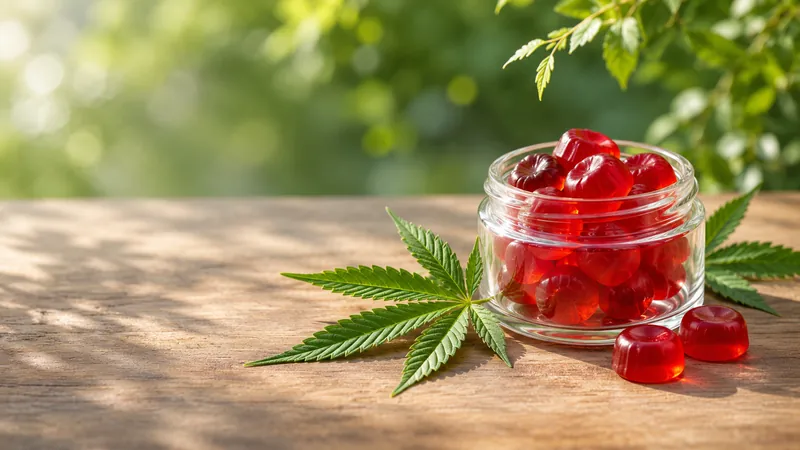
Hemp gummies are individually formed, chewable products that include or are marketed as including a hemp-derived ingredient. For Australian readers, the most useful distinction is between gummies made with permitted hemp seed food ingredients and products containing other cannabis preparations. The format itself is easy to recognise; the ingredient declaration is what tells you which type of product you are looking at.
Hemp is an interesting plant precisely because its different parts have different uses. Its fibres have industrial applications, its seeds can provide food ingredients, and certain plant compounds are used in separate medicinal contexts. A gummy brings one of these ingredients into a familiar food-like format. Understanding that combination is a rewarding introduction to the wider world of hemp products.
What makes a gummy a hemp gummy?
A gummy has two aspects: its physical format and its formulation. The first is the soft, shaped piece that comes out of the container. The second is the combination of ingredients that makes the piece possible. Gelling ingredients give it structure, sweeteners and flavourings contribute to taste, and a hemp-derived ingredient gives the product its name. The actual recipe varies from brand to brand.
A jar can carry the same broad product description as another jar while containing a different recipe. This is similar to the way two fruit gummies may use entirely different fruit ingredients. The category name tells you where to start looking, but it is not a recipe. For hemp products, the distinction is especially valuable because seed ingredients and cannabinoid preparations should be understood separately.
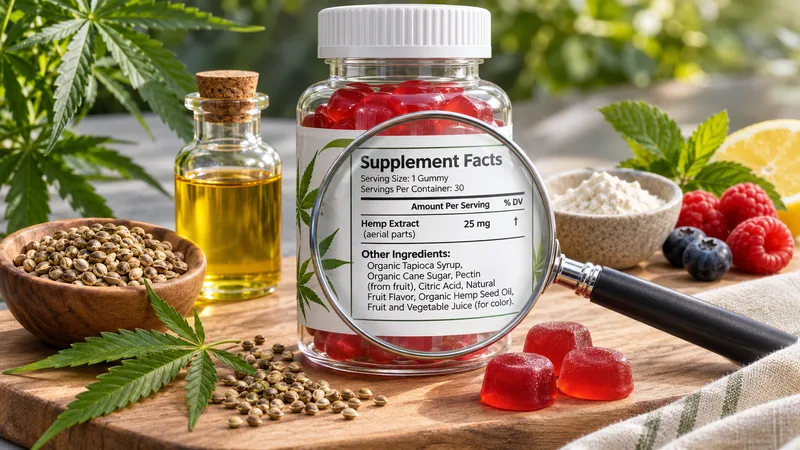
A well-presented label allows a reader to connect the product name with its actual ingredients. It may identify the hemp ingredient, how much is present, the number of individual pieces and the amount used as a serving for labelling purposes. This information gives the familiar gummy format a much more meaningful identity.
Where the hemp ingredient comes from
Hemp seed oil is produced from the seeds of the plant. As a food ingredient it contains naturally occurring fatty acids, although the nutritional contribution of a finished gummy depends on its recipe and the amount of oil included. Hemp seed ingredients have their own place in food culture and do not need to be described as medicinal cannabis to be interesting.
A different description, such as hemp extract, may refer to material prepared from the plant using a particular processing method. The words do not identify the source material or the chemical composition on their own. Cannabidiol, commonly abbreviated to CBD, is the name of a specific compound rather than another name for seed oil. Our hemp and CBD comparison explains that distinction in greater detail.
For a reader encountering hemp for the first time, this is perhaps the most useful lesson: look at which ingredient is actually being discussed before drawing conclusions from information about the plant as a whole. Hemp offers a range of applications, and the differences make the subject more interesting, not less.
Why the gummy format is distinctive
Food formats are not merely packaging decisions. They change the way a recipe is presented, stored and experienced. A gummy is a small, individually shaped item that has already been combined with its other ingredients. Unlike a loose powder, it does not need to be mixed into a separate recipe. Unlike a liquid oil, it has a formed texture rather than a pourable consistency.
The appeal of a gummy can be understood through everyday preferences. Some people enjoy a soft chew; others prefer the simplicity of a liquid or the neutral character of a capsule. There is no universal winner among these formats. They serve different preferences, and the composition of any product matters more than the format when evaluating its properties.
Taste also plays an important role. Seed-derived oils may have a characteristic flavour that depends on their processing and freshness. A gummy recipe can incorporate flavourings and acidity to create a distinctive sensory profile. The exact balance belongs to the recipe rather than to hemp itself, so a description of one brand's flavour should not be taken as a description of the entire category.
How gummies take shape
The structure of a gummy usually depends on ingredients capable of forming a gel. Pectin, a substance associated with plant material, and gelatine, derived from animal collagen, are familiar examples. Each creates a different kind of texture. A recipe may also include other ingredients to regulate moisture, acidity and the consistency of the finished piece.
During the manufacture of a conventional gummy, a prepared mixture can be formed into individual shapes and allowed to set under controlled conditions. The formulation needs to balance the gelling system with other ingredients, including oils if present. That balance affects how a piece holds together and how it feels when chewed. The process used by an individual manufacturer should be established from that manufacturer's documentation, rather than inferred from the appearance of the product.
A useful analogy is the difference between jam and jelly. Both may use fruit and a gelling system, but they achieve different textures depending on their recipes. Gummies also vary in firmness, surface finish and moisture. A firmer piece does not automatically contain more hemp, and a softer piece does not automatically contain less. Texture and ingredient quantity are separate characteristics.
The Australian context
Australia has an established food framework for certain low-THC hemp seed ingredients. Changes to the Australia New Zealand Food Standards Code in 2017 permitted qualifying hemp seed foods. This development is an important part of the story of modern hemp as a food ingredient. It gives Australians a framework for understanding the difference between permitted seed foods and other cannabis products.
The rules apply to specific ingredients and conditions, not to every item with hemp in its name. A foreign product label may also use terminology that is unfamiliar in Australia. For example, an overseas supplement category does not necessarily correspond to the way the same formulation is classified here. Our Australian hemp gummies regulation guide explores how these distinctions fit together.
The important point for general readers is that the plant has legitimate food uses alongside its other applications. A conversation about hemp seed foods can therefore focus on food ingredients, formulation and labelling rather than automatically becoming a conversation about medicinal cannabis.
A useful way to read the front and back of a jar
The front label introduces the brand and the product. Its design might contain the product name, illustrations, a quantity and the number of pieces in the container. These are useful clues, but they describe different things. A net weight describes the weight of the contents, while a count tells you how many pieces are present. A milligram declaration is meaningful only when the ingredient and measurement basis are also specified.
Imagine a fictional jar containing 40 pieces, with 400 milligrams of a named oil in total. If that oil is distributed evenly, the arithmetic average is 10 milligrams per piece. This is a reading exercise, not a recommendation for any amount and not an assertion about a real brand. A second label that declares 400 milligrams per serving would be describing something quite different. The units look similar, but their meaning changes with the basis of the calculation.
The back of the jar may give more detailed information about the ingredients, allergens, date marking and storage. These details are often more useful than broad phrases on the front. They also make comparisons between products more meaningful because the reader can compare like with like.
Hemp gummies as part of the wider hemp category
Hemp seed products come in several formats. Seeds may be presented whole or hulled where permitted; seed oil can be used in food formulations; and seed-derived ingredients can appear in other recipes. Gummies are one possible format, not the defining use of hemp in food.
This variety is useful when exploring what people mean by hemp products. A bottle of oil and a formed gummy can have entirely different compositions, even if the word hemp appears prominently on both. A gummy may contain a relatively small amount of oil alongside its other ingredients. A pure oil, by comparison, is not made up of a gelling system and flavouring ingredients. Neither format automatically reproduces the properties of the other.
Product descriptions become clearer when they acknowledge these differences. A description of a gummy's flavour or texture can be perfectly useful without making an assertion about its health effects. Similarly, a discussion of the fatty acids naturally found in seed oil does not need to imply that a small gummy provides a significant amount of those nutrients.
What makes information about hemp useful?
The most helpful product information has several layers. The first is identification: the reader should understand which product and which version of its packaging are being discussed. The second is composition: the ingredients and quantities should be described in their proper context. The third is interpretation: claims about the finished product should be separated from general information about the ingredient.
This approach encourages curiosity about hemp without treating every label as a scientific document. A label is an important source of information, but it does not settle every question. Analytical records, where applicable, can provide additional context about a batch. Research may address particular substances or formulations, and it is important to understand what was actually studied before applying the findings to other products.
As a general introduction, the Hemp Gummies Australia homepage brings together information about these subjects. Readers who want a more technical look at the recipe can explore our ingredient and label guide, which covers the role of the gummy base, flavourings and quantity declarations in more depth.
Common questions about the format
What hemp ingredients are used in gummies?
Different recipes use hemp seed oil or other hemp-derived preparations. The ingredient list identifies the preparation used. Hemp seed oil is distinct from CBD.
Why do hemp gummies come in different colours?
Fruit ingredients, flavourings and colours create the appearance of a gummy. The declared quantity, rather than the colour, tells you how much of a named hemp ingredient is present.
Can hemp gummies be plant-based?
Yes. Pectin is a plant-derived gelling ingredient commonly used to give gummies their chewy texture. Gelatine is animal-derived, so the complete recipe matters for dietary preferences.
How are hemp gummies different from ordinary sweets?
Both can have a similar chewable texture, but hemp gummies contain a declared hemp-derived ingredient and may have specific serving and storage instructions.
What can product packaging tell me?
Packaging helps identify a brand, its product and its declared ingredients. We compare the products we receive with their published packaging and ingredient information. Chemical composition is a separate question addressed by laboratory analysis.
Further reading
The official Australian food framework is explained by Food Standards Australia New Zealand – Hemp seeds as food. The resource explains the permitted food category and its background.